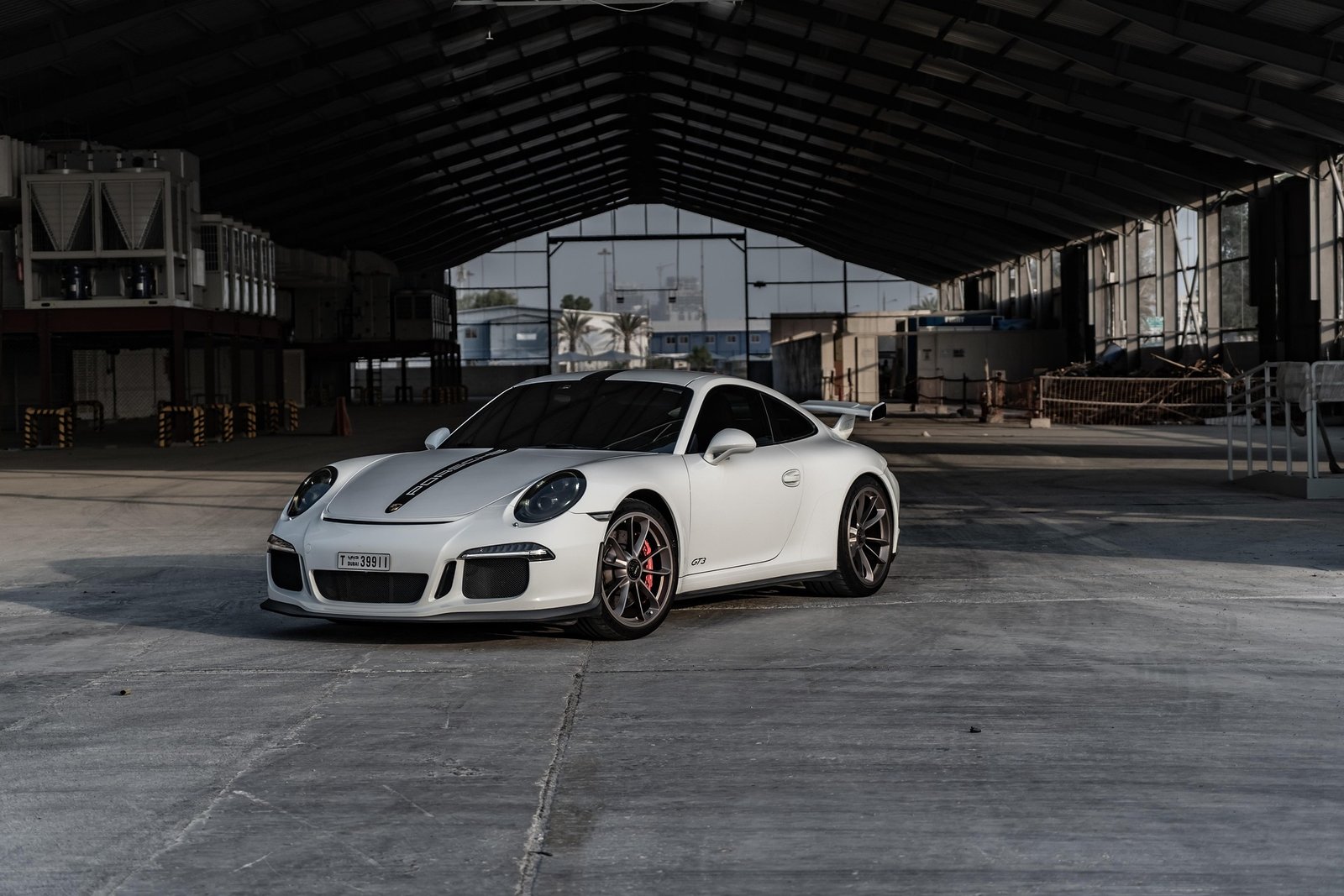
The new Porsche 911 Turbo S takes the flagship version of the legendary sports car into a new era of performance. For the first time, the 911 Turbo S combines its twin-turbocharged flat-six engine with Porsche’s T-Hybrid technology, creating a powertrain that is more powerful, more responsive and considerably more sophisticated than the system used by its predecessor.
The result is a 911 Turbo S with a system output of 711 PS, making it the most powerful production 911 Porsche has produced. Maximum combined torque reaches 800 Nm, while the car can accelerate from 0 to 100 km/h in just 2.5 seconds and reach a top speed of 322 km/h.
Those numbers immediately establish the new Turbo S as one of the fastest road-going Porsche models ever created. However, the biggest change is not simply the increase in horsepower. Porsche has redesigned the powertrain around hybrid assistance, electric turbochargers and a high-voltage electrical system while attempting to preserve the character that has defined the 911 Turbo for decades.
The new system is designed around performance rather than electric-only driving. Unlike a conventional plug-in hybrid, the T-Hybrid technology in the Turbo S is primarily intended to improve acceleration, turbocharger response and overall dynamic performance.
This distinction is important. Porsche is not trying to turn the 911 Turbo S into an electric sports car. Instead, the company is using electrical energy to make the combustion engine and turbocharging system work more effectively.
The Most Powerful Production 911
The headline figure is 711 PS.
Porsche rates the new Turbo S at 523 kW, equivalent to 711 PS. Maximum system torque is 800 Nm, available across an unusually broad range from 2,300 to 6,000 rpm. Full system power is available from 6,500 to 7,000 rpm.
The previous-generation Turbo S already delivered enormous performance, so increasing output by another 61 PS was not simply a matter of adding more conventional turbocharger boost.
The new model required a different approach.
Porsche has integrated two electrically assisted turbochargers into the powertrain. These eTurbos can use electrical energy to accelerate the turbocharger system, helping build boost more quickly and reducing the traditional delay associated with exhaust-driven turbocharging.
The result is intended to provide a stronger and more immediate response when the driver applies the accelerator.
For a sports car producing more than 700 PS, response is just as important as peak power.
A huge horsepower number is less useful if the engine requires significant time to build boost.
The T-Hybrid system addresses that problem.
A New 3.6-Litre Flat-Six
At the heart of the new system is a 3.6-litre six-cylinder boxer engine.
The engine belongs to the latest generation of Porsche’s flat-six architecture and is closely related to the power unit used by the 911 Carrera GTS.
For the Turbo S application, Porsche has developed the engine specifically around the requirements of the flagship model.
The engine uses twin turbocharging and operates with a maximum engine speed of 7,500 rpm. Porsche’s technical information lists a 97 mm cylinder bore, an 81 mm stroke and a compression ratio of 9.2:1.
The flat-six configuration remains one of the defining characteristics of the 911.
The horizontally opposed cylinders help maintain a low centre of gravity, which is important for handling.
This layout has been associated with the 911 for generations, and Porsche has continued developing it rather than replacing it completely with an electric powertrain.
The new hybrid system therefore adds technology without abandoning the mechanical architecture that gives the Turbo S its identity.
Twin eTurbo Technology
The biggest technical development is the use of two electric exhaust-gas turbochargers.
The 911 Carrera GTS introduced Porsche’s T-Hybrid system with a single eTurbo.
The new Turbo S takes the concept further by using two electrically assisted turbochargers specifically developed for the flagship model. Porsche says the turbines and compressors were designed around the performance requirements of the Turbo S.
An eTurbo combines the functions of a conventional exhaust-driven turbocharger with an electric motor.
In a traditional turbocharger, exhaust gases spin the turbine, which drives the compressor.
The problem is that exhaust flow depends on engine speed and throttle demand.
At lower engine speeds, there may not be enough exhaust energy to generate maximum boost immediately.
An electric motor can help accelerate the turbocharger before sufficient exhaust energy becomes available.
That makes the system more responsive.
In the Turbo S, this technology is used to improve the entire power delivery rather than simply adding a small amount of electric assistance.
Why Two Electric Turbochargers Matter
Using two eTurbos allows Porsche to optimize the turbocharging system for the six-cylinder engine.
Each turbo can serve part of the engine’s cylinder banks while the electrical assistance helps build boost.
This arrangement gives engineers more control over how quickly boost pressure develops.
The result should be a more immediate response when the driver moves from partial throttle to full throttle.
That matters particularly when exiting corners.
A conventional turbocharged engine may briefly hesitate while exhaust energy increases.
The eTurbo system can respond electrically and help deliver boost more quickly.
For the driver, the important result is simple.
The engine should feel more immediate.
The 1.9-kWh Battery
The hybrid system requires an energy source.
Porsche uses a compact 1.9-kWh high-voltage battery.
The battery uses 216 round cells and operates within the car’s 400-volt electrical architecture. Porsche says the battery was positioned at the front of the vehicle to help achieve the desired weight distribution.
The battery is remarkably small compared with the large battery packs found in fully electric vehicles and conventional plug-in hybrids.
That is intentional.
The Turbo S does not need enough energy to drive long distances electrically.
Instead, the battery needs to deliver and recover energy rapidly.
It acts as a performance energy reservoir.
When electrical assistance is required, energy can be delivered to the electric components.
When the vehicle is able to recover energy, the battery can store it again.
This creates a continuous cycle of energy recovery and deployment.
Hybrid Technology Designed for Performance
The word “hybrid” often suggests fuel economy.
In the Turbo S, the priority is different.
Porsche has developed the system to improve performance.
The electrical system provides energy to the electric turbochargers and the electric motor integrated into the PDK transmission.
This allows the combustion engine to receive assistance exactly where it can be most useful.
The result is a powertrain that combines combustion and electric technologies without making electric driving the central objective.
The driver still experiences a flat-six engine.
The engine still produces its characteristic sound.
The transmission still changes gears.
The difference is that electrical assistance is now working behind the scenes to make the entire system more effective.
Electric Motor in the PDK
The eight-speed Porsche dual-clutch transmission contains an integrated electric motor.
This motor contributes additional drive power and works with the hybrid system to provide stronger overall performance.
Porsche’s system architecture allows the electric motor and combustion engine to work together through the PDK.
The result is a highly integrated powertrain rather than a combustion engine with an unrelated electric motor added later.
The electric motor can contribute immediately because electric motors do not require exhaust gases to build torque.
This instant response complements the characteristics of the turbocharged flat-six.
The combustion engine provides sustained high-speed power.
The electric system can help provide immediate response.
Together, they create a broader performance envelope.
800 Nm of Torque
The new Turbo S produces 800 Nm of maximum system torque.
More importantly, Porsche makes that torque available over a wide range from 2,300 to 6,000 rpm.
This broad range is one of the most important features of the new powertrain.
The driver does not need to wait until a specific point in the rev range to access maximum torque.
Whether accelerating from a lower speed or already travelling rapidly, the engine and hybrid system can provide substantial force.
This also makes the car easier to drive quickly.
The transmission has a wider range of useful gears because the engine can produce strong torque across such a large operating window.
0–100 km/h in 2.5 Seconds
The performance figures are extraordinary.
The new 911 Turbo S reaches 100 km/h from a standstill in 2.5 seconds with the Sport Chrono package. It reaches 200 km/h in 8.4 seconds. Top speed is 322 km/h.
These figures place the Turbo S deep into supercar territory.
The important point is that this performance comes from a vehicle that remains usable on normal roads.
It has all-wheel drive.
It has a sophisticated chassis.
It has advanced electronic control systems.
It can be driven on long journeys.
It is not a stripped-down competition machine.
The ability to combine extreme acceleration with everyday usability is one of the strongest characteristics of the Turbo S.
Acceleration to 200 km/h
The 0–200 km/h figure is arguably even more impressive than the initial launch.
The Turbo S needs only 8.4 seconds to reach 200 km/h.
That demonstrates the strength of the complete powertrain.
The car does not simply launch hard and then lose momentum.
It continues accelerating aggressively as speed increases.
The electric assistance helps improve responsiveness, while the 3.6-litre flat-six provides sustained power at high engine speeds.
The eight-speed PDK keeps the engine in the appropriate part of its powerband.
The result is acceleration that remains strong throughout the speed range.
322 km/h Top Speed
The new Turbo S reaches 322 km/h.
That makes it one of the fastest production 911 models in Porsche’s history.
At this speed, the engineering requirements become extremely demanding.
The tyres must remain stable.
The suspension must maintain control.
The aerodynamic systems must manage airflow.
The cooling system must remove substantial heat.
The braking system must be capable of reducing speed repeatedly.
The Turbo S has therefore been developed as a complete high-speed system rather than simply a high-power engine mounted inside a sports car.
Weight Increase
Hybrid technology inevitably adds components.
There is a high-voltage battery.
There are electric motors.
There are additional control systems.
There is more wiring and electrical hardware.
The new Turbo S therefore weighs more than its predecessor.
Porsche’s U.S. specification lists a curb weight of 3,829 pounds, representing an increase of approximately 180 pounds over the previous model. Porsche’s broader technical material notes an increase of 85 kilograms compared with its predecessor.
Normally, additional weight would be considered a major disadvantage for a sports car.
Porsche’s engineers had to make sure the performance gains more than compensated for it.
The Nürburgring result provides the clearest evidence that they succeeded.
A 7:03.92 Nürburgring Lap
During final development testing, the new 911 Turbo S completed the Nürburgring Nordschleife in 7 minutes and 3.92 seconds.
Porsche says this was approximately 14 seconds quicker than the predecessor.
The run was completed by Porsche brand ambassador and racing driver Jörg Bergmeister under official supervision.
This is an important achievement because the Nürburgring is not a simple acceleration test.
A strong lap requires excellent braking, cornering, traction, stability and power delivery.
The car must also deal with elevation changes, high-speed sections and a huge variety of corners.
The improvement therefore demonstrates that Porsche’s hybrid system has not merely increased straight-line performance.
The entire vehicle has become more capable.
The Hybrid System and Weight Distribution
Porsche had to consider where the additional hybrid components would be placed.
The high-voltage battery is located at the front.
This helps influence the vehicle’s weight distribution and prevents the hybrid hardware from becoming concentrated in one part of the car.
Weight distribution is particularly important for a rear-engined sports car.
The 911 has always required careful management of its unusual engine placement.
Adding hybrid components therefore created another engineering challenge.
Porsche’s solution integrates the battery into the overall vehicle architecture.
The goal is to make the additional weight work with the chassis rather than simply adding mass wherever space was available.
The Rear-Engine Character Remains
Despite all of the new technology, the Turbo S remains unmistakably a 911.
The engine continues to sit behind the rear axle.
This creates a distinctive weight distribution that affects how the car accelerates, brakes and turns.
The rearward weight bias provides strong traction under acceleration.
At the same time, it requires careful chassis engineering to maintain stability during corner entry and rapid changes of direction.
Porsche has spent decades developing ways to exploit the characteristics of the rear-engine layout.
The new Turbo S benefits from that experience.
The hybrid technology does not replace the 911’s traditional dynamics.
It adds another layer to them.
Porsche Traction Management
Power reaches the road through Porsche Traction Management all-wheel drive.
The system distributes torque between the axles according to driving conditions.
With 711 PS and 800 Nm, four-wheel traction is essential.
A rear-wheel-drive version would have to manage enormous levels of torque through the rear tyres alone.
The Turbo S instead uses the front axle to help transfer power to the road.
This contributes directly to the 2.5-second acceleration time.
It also improves stability in poor weather.
The result is a car that can exploit its performance more consistently.
The New Generation of Tyres
Porsche has also developed a new tyre configuration for the Turbo S.
The rear tyres are 10 mm wider than those of the predecessor, measuring 325/30 ZR 21.
The front tyres remain 255/35 ZR 20.
The wider rear tyres increase the available contact area.
This is particularly important because the rear axle carries the engine and must transmit enormous amounts of torque.
The wider rubber also contributes to cornering stability.
Porsche says the new tyre generation maintains wet-weather capability while improving dry-road handling.
That balance is important because the Turbo S is designed as an all-rounder.
It cannot be optimized exclusively for dry circuits.
Owners will use the car on public roads in changing conditions.
Porsche Ceramic Composite Brakes
The new Turbo S comes with Porsche Ceramic Composite Brakes as standard.
Porsche has further developed the braking system for the new model, including brake pads derived from motorsport technology.
The rear brake discs have increased from 390 mm to 410 mm, while the front discs measure 420 mm. Porsche describes this as its largest PCCB system fitted to a two-door model.
The braking system has to deal with the same extreme performance that makes the Turbo S so quick.
A car capable of accelerating to 200 km/h in 8.4 seconds requires powerful and consistent brakes.
The ceramic discs are designed to tolerate high temperatures while maintaining strong braking performance.
This makes them particularly valuable during repeated hard driving.
Active Chassis Technology
The new Turbo S also benefits from advanced chassis technology.
One of the most significant systems is Porsche Dynamic Chassis Control.
For the new model, Porsche uses an electrohydraulic version of the system, known as ehPDCC.
The system actively controls body movement by adjusting hydraulic pressure through interconnected active anti-roll bars.
The objective is to reduce body roll while maintaining a high level of ride comfort.
This is particularly important for a vehicle that needs to perform both on the road and on a circuit.
A completely rigid setup could provide excellent track control but make everyday driving unpleasant.
Active chassis technology allows Porsche to reduce that compromise.
Improved Agility
The combination of hybrid power, wider tyres, active chassis control and all-wheel drive gives the Turbo S a stronger dynamic character.
The driver can enter a corner with confidence, use the brakes heavily and then apply power earlier during the exit.
The all-wheel-drive system helps distribute torque.
The wider rear tyres provide additional grip.
The active anti-roll system controls body movement.
The result is greater agility despite the additional weight.
This is exactly what Porsche needed to achieve.
Adding hybrid technology to a sports car only makes sense if the additional hardware produces a net performance benefit.
The Nürburgring result suggests that this has been achieved.
Hybrid Responsiveness
The biggest difference a driver may notice is not the extra 61 PS.
It is the response.
Traditional turbocharged engines can feel different depending on engine speed and exhaust flow.
Electric turbo assistance changes that relationship.
The eTurbo motors can accelerate the turbocharger before exhaust energy reaches its maximum level.
This helps build boost faster.
The driver therefore receives a more immediate reaction when applying throttle.
That responsiveness is particularly important during corner exits.
A quick response allows the driver to modulate power more accurately.
The car becomes easier to place because the engine reacts more directly to throttle inputs.
A Different Kind of Hybrid
The Turbo S’s hybrid system is fundamentally different from the systems used in many mainstream hybrid vehicles.
It is not designed around long periods of electric-only driving.
There is no large battery designed for dozens of kilometres of electric range.
The 1.9-kWh battery is compact because the objective is performance.
Energy is recovered and deployed rapidly.
The electric motor and eTurbos use that energy when it can provide the greatest benefit.
This makes the system closer to a performance energy-recovery system than a traditional efficiency-focused hybrid.
Porsche has effectively used electrification as a tool for making a combustion sports car faster.
The Evolution of the Turbo S
The Turbo S has always represented the top end of the regular 911 family.
Over the years, Porsche has repeatedly increased its performance while maintaining the model’s reputation for usability.
The new generation continues that tradition.
But the introduction of T-Hybrid technology marks a major change.
The Turbo S is now part of the broader electrification strategy affecting the 911 range.
The Carrera GTS introduced T-Hybrid technology first.
The Turbo S takes that concept to a higher performance level with two eTurbos and a substantially higher system output.
This suggests that hybrid technology is becoming an important part of Porsche’s future performance strategy.
Performance Without Losing Usability
One of Porsche’s strongest claims for the Turbo S is that it remains an everyday sports car.
The car is not designed exclusively for the track.
It has a comfortable cabin.
It can be driven on long journeys.
It offers advanced assistance systems.
It has a sophisticated suspension.
It can be driven in changing weather.
Yet the same car can reach 322 km/h and accelerate to 100 km/h in 2.5 seconds.
That dual-purpose character is one of the reasons the Turbo S has such a strong reputation.
The new generation attempts to preserve that balance while dramatically increasing performance.
Coupe and Cabriolet
The new Turbo S is available in both Coupe and Cabriolet forms.
The Coupe is the lighter and more focused configuration, making it the natural choice for buyers prioritizing outright performance.
The Cabriolet provides the same basic powertrain and technology while adding the open-air experience.
Both versions retain the central characteristics of the Turbo S.
The choice therefore depends largely on the owner’s priorities.
The Coupe is the purer performance option.
The Cabriolet adds another dimension to the car’s luxury and grand-touring character.
Exterior Design
The new Turbo S receives a more muscular appearance that reflects its increased performance.
The wide body emphasizes the car’s stance.
Large air openings support cooling.
The rear design incorporates the visual language associated with the Turbo family.
The wide tyres and large wheels reinforce the performance character.
The exterior is not simply a styling exercise.
The bodywork has been developed around cooling, airflow and aerodynamic stability.
That functional approach is characteristic of Porsche.
The company traditionally attempts to make design elements serve a technical purpose.
Active Aerodynamics
Aerodynamics are another major part of the new Turbo S.
Porsche uses active aerodynamic elements that can change their configuration according to driving conditions.
This allows the car to balance aerodynamic drag and downforce.
At high speeds, additional aerodynamic support can improve stability.
During other driving conditions, reducing drag can help efficiency and top speed.
The ability to change aerodynamic characteristics means the car does not have to operate with one fixed compromise.
The system can adapt.
This is particularly useful for a car intended to combine everyday driving with extreme performance.
The Interior
Inside, the Turbo S combines traditional Porsche design with modern digital technology.
The cabin remains focused on the driver.
Controls are arranged around the driver rather than treating the interior as a purely screen-based environment.
The digital displays provide information about the vehicle and its performance.
The driver can monitor important systems while configuring different driving modes.
The objective is to provide technology without removing the sense that this is a sports car.
Sport Chrono
Sport Chrono remains an important part of the Turbo S’s performance package.
The system provides launch-control functions and allows the driver to access more aggressive driving settings.
The 2.5-second 0–100 km/h figure depends on the appropriate performance configuration.
Launch control allows the powertrain and all-wheel-drive system to coordinate the initial acceleration.
The result is a highly repeatable launch when conditions are suitable.
The Meaning of 711 PS
The number 711 PS is more than a marketing figure.
It places the Turbo S above the previous model by 61 PS.
But the increase is particularly significant because Porsche has achieved it while introducing hybrid technology and maintaining the basic character of the 911.
The company has not simply enlarged the engine dramatically.
Instead, it has used electrification to improve the efficiency and responsiveness of the turbocharging system.
This is an important direction for performance cars.
Rather than treating electrification as a replacement for the combustion engine, Porsche is using it to enhance the combustion engine.
The New Performance Formula
The formula behind the Turbo S can be summarized in several connected elements.
The 3.6-litre flat-six provides the combustion power.
The two eTurbos improve boost response.
The electric motor in the PDK provides additional assistance.
The 1.9-kWh battery stores electrical energy.
The 400-volt system allows rapid energy transfer.
The eight-speed PDK manages the power.
Porsche Traction Management distributes torque.
The wider rear tyres increase grip.
PCCB provides braking performance.
ehPDCC controls body movement.
Active aerodynamics manage airflow.
Each component contributes to the final result.
Why the Hybrid System Makes Sense
Some enthusiasts initially associate hybrid technology with efficiency rather than performance.
The Turbo S challenges that assumption.
Here, electrification is being used to solve problems associated with high-performance turbocharging.
The electric system can help the turbochargers respond faster.
The electric motor can provide immediate torque.
The battery can store recovered energy.
The combustion engine can continue producing high power at high speed.
This creates a combination that neither system could achieve as effectively on its own.
The result is not a compromise between electric and petrol power.
It is an integration of both.
Final Perspective on Part 1
The new Porsche 911 Turbo S represents a major technological step for the 911 family.
With 711 PS, 800 Nm, 0–100 km/h in 2.5 seconds and a 322 km/h top speed, it has performance figures that place it among the world’s most capable production sports cars.
But the numbers only explain part of the story.
The most important change is the introduction of Porsche’s twin-turbo T-Hybrid powertrain.
Two electrically assisted turbochargers improve responsiveness.
A compact 1.9-kWh high-voltage battery provides the required electrical energy.
An electric motor integrated into the PDK contributes additional power.
The 400-volt architecture allows the system to operate rapidly.
The result is a hybrid system designed specifically around performance.
Porsche has also addressed the additional weight through chassis development, wider tyres, larger ceramic brakes, active anti-roll technology and advanced aerodynamics.
The 7:03.92 Nürburgring Nordschleife lap demonstrates how successful that approach has been. Porsche says the new car was approximately 14 seconds quicker than its predecessor.
The new Turbo S therefore represents more than another increase in horsepower.
It is a new interpretation of what a hybrid performance car can be.
Instead of using electrification primarily to reduce fuel consumption, Porsche has used it to make the 911 Turbo S faster, more responsive and more capable.
And that may be the most important development of all.
The biggest question surrounding the new Porsche 911 Turbo S is not whether it is faster than its predecessor. Porsche has already answered that question with its acceleration figures and Nürburgring lap time.
The more interesting question is how Porsche managed to make a heavier hybrid-assisted 911 substantially quicker while preserving the characteristics that have made the Turbo S one of the most complete high-performance sports cars in the world.
The answer lies in the way Porsche integrated the hybrid system with the chassis, all-wheel drive, brakes, tyres and aerodynamics.
The new Turbo S is not simply a 911 with an electric motor added to the existing powertrain. The entire vehicle has been developed around the interaction between combustion power and electrical assistance.
That approach becomes particularly obvious when examining the car’s chassis.
Active Chassis Technology
The new Turbo S uses Porsche Dynamic Chassis Control with an electrohydraulic system.
Instead of relying solely on conventional passive anti-roll bars, the system actively controls body movement through hydraulic pressure.
When the car enters a corner, the system can counteract body roll.
This keeps the body more level and helps the tyres maintain a more consistent relationship with the road.
The advantage is not simply a flatter appearance.
Keeping the body under control helps Porsche engineers maintain predictable tyre loading.
That allows the driver to carry higher cornering speeds while maintaining confidence.
The system also helps balance performance with comfort.
A car with extremely stiff anti-roll bars can feel excellent on a smooth track but uncomfortable on public roads.
The electrohydraulic system gives Porsche more freedom to control the vehicle’s behavior without making the suspension unnecessarily harsh.
Why Body Control Matters in a 911 Turbo S
The Turbo S is capable of enormous acceleration.
That means the chassis must cope with rapid changes in weight transfer.
During hard acceleration, weight moves toward the rear.
During heavy braking, weight shifts toward the front.
During cornering, lateral forces move load between the wheels.
The electronic chassis systems continuously respond to these changes.
The objective is to keep the tyres working as effectively as possible.
This is particularly important because the Turbo S uses very wide rear tyres and a powerful rear-biased architecture.
The chassis must exploit the rear traction advantage without allowing the car to become unpredictable.
Rear-Engine Traction Advantage
The rear-engine layout gives the 911 a unique advantage under acceleration.
A large portion of the vehicle’s weight is positioned near the driven rear wheels.
When the driver accelerates, additional weight transfers toward the rear axle.
This can increase available traction.
The result is a car that can launch extremely hard.
Porsche then adds all-wheel drive to distribute power between the front and rear axles.
The combination creates extraordinary launch capability.
The 2.5-second 0–100 km/h time is therefore not simply a result of 711 PS.
It is the product of the entire vehicle architecture.
Porsche Traction Management
Porsche Traction Management controls the all-wheel-drive system.
The system can adjust torque distribution based on acceleration, steering input, wheel speed and available grip.
During hard acceleration, additional torque can be sent toward the front axle when necessary.
During cornering, the system can alter the balance to support the driver’s chosen line.
The driver does not have to manually control these changes.
They happen automatically in fractions of a second.
This is one reason the Turbo S can be driven quickly by a much wider range of drivers than an older, less electronically controlled high-performance 911.
Performance in Wet Conditions
The all-wheel-drive system also has an important advantage on wet roads.
A 711-PS rear-drive sports car would require significant driver discipline when accelerating on a slippery surface.
The Turbo S can distribute power between all four wheels.
This does not eliminate the laws of physics.
The tyres still have a finite amount of grip.
But the system provides a much larger margin before wheelspin becomes a major problem.
That makes the Turbo S more usable throughout the year.
It can deliver extreme performance without requiring perfect dry-road conditions.
Wider Rear Tyres
Porsche has increased the width of the rear tyres for the new Turbo S.
The rear tyres measure 325/30 ZR21, compared with narrower rubber on the previous model.
The front tyres remain 255/35 ZR20.
The staggered arrangement is typical of a high-performance rear-engine sports car.
The rear axle has to handle both the engine’s weight and a huge amount of torque.
Wider rear tyres provide additional contact area.
They also help the vehicle remain stable during high-speed cornering.
The tyres were developed specifically for the Turbo S rather than simply selected from an existing catalogue.
That matters because tyre characteristics influence steering response, braking, traction and ride quality.
High-Performance Tyre Development
Porsche’s tyre strategy demonstrates how closely the company’s road cars are connected to motorsport development.
The Turbo S requires tyres capable of handling more than 700 PS while remaining usable on public roads.
The tyres must work when cold.
They must function in wet conditions.
They must tolerate high temperatures during aggressive driving.
They must also remain stable at more than 300 km/h.
Those requirements conflict with one another.
A tyre optimized purely for dry-track performance would not necessarily be appropriate for everyday use.
Porsche therefore has to find a balance between road usability and extreme performance.
Porsche Ceramic Composite Brakes
The braking system is one of the most significant changes to the new Turbo S.
Porsche Ceramic Composite Brakes are standard.
The front discs measure 420 mm, while the rear discs increase to 410 mm.
Porsche describes the system as its largest PCCB setup for a two-door model.
The brakes are also combined with brake pads derived from motorsport technology.
The objective is to provide strong initial braking and consistent performance under repeated heavy use.
Why Ceramic Brakes Matter
Ceramic brakes offer several advantages.
They can withstand extremely high temperatures.
They resist brake fade during repeated hard braking.
They are lighter than equivalent cast-iron discs.
Reducing unsprung and rotating mass can improve suspension response and steering behavior.
The lighter discs also reduce the amount of energy required to accelerate the wheels.
For a vehicle already carrying additional hybrid hardware, reducing mass in other areas becomes particularly valuable.
Braking at 300 km/h and Beyond
The importance of the brakes becomes obvious when considering the Turbo S’s top speed.
The car can reach 322 km/h.
At that speed, the amount of kinetic energy that needs to be converted into heat during braking is enormous.
The braking system must therefore operate reliably under extreme conditions.
This is why Porsche does not treat the brake system as a secondary component.
The brakes are part of the overall performance architecture.
A car that accelerates rapidly but cannot repeatedly stop effectively would not qualify as a true high-performance Porsche.
Active Aerodynamics
Aerodynamics play another major role.
The Turbo S uses active aerodynamic elements that can change their configuration according to driving conditions.
This allows Porsche to optimize the car for different situations.
At lower speeds, aerodynamic drag can be minimized.
At high speeds or during aggressive driving, the system can increase aerodynamic support.
The advantage is that the car does not have to use a single fixed aerodynamic setting.
A fixed wing could generate substantial downforce but create additional drag during high-speed cruising.
Active aerodynamics can change the balance.
Aerodynamic Stability
At more than 300 km/h, aerodynamic stability becomes critical.
Small changes in airflow can create large changes in aerodynamic forces.
The Turbo S therefore has to maintain a predictable balance between the front and rear axles.
If the rear receives significantly more aerodynamic support than the front, the car can become stable but potentially less agile.
If the front receives too much relative support, high-speed stability can suffer.
Porsche’s active aerodynamic system helps maintain the required balance.
This is another example of technology working behind the scenes.
The driver simply experiences a stable car.
High-Speed Cooling
A 711-PS engine generates enormous amounts of heat.
The hybrid system also introduces additional thermal-management requirements.
The battery, electric motors, turbochargers, engine and transmission all have different temperature requirements.
Porsche therefore developed the cooling system around the entire powertrain.
Airflow through the front of the vehicle helps cool the engine and associated systems.
The turbochargers operate at extremely high temperatures, making thermal control essential.
The hybrid components also require their own temperature management.
The goal is to maintain consistent performance rather than allow output to fall after repeated hard acceleration.
Thermal Management of the Hybrid System
Hybrid performance systems have a unique challenge.
The battery needs to remain within a specific temperature range.
If it becomes too hot, power delivery may need to be reduced.
If it becomes too cold, electrical output may be limited.
Porsche therefore designed the high-voltage system around rapid energy transfer.
The compact 1.9-kWh battery is not designed for long electric driving.
It is designed to provide and recover energy quickly.
This makes thermal management particularly important.
The system may repeatedly deliver electrical power during aggressive driving and then recover energy under braking.
Energy Recovery
The hybrid system can recover energy during deceleration.
Instead of allowing all of the vehicle’s kinetic energy to become heat in the brakes, some of it can be converted into electrical energy.
That energy is stored in the high-voltage battery.
It can later be used to power the electric motor and turbochargers.
This creates a performance cycle.
Acceleration consumes electrical energy.
Braking recovers some energy.
The battery stores it.
The system then deploys that energy again.
This approach makes electrification useful even when the driver never drives the car in electric-only mode.
Regenerative Braking
Regenerative braking also contributes to overall efficiency.
When the driver lifts off the accelerator or brakes, the electric motor can operate as a generator.
The motor converts kinetic energy into electrical energy.
The battery stores the recovered power.
However, Porsche must carefully balance regenerative braking with the conventional ceramic braking system.
The driver expects predictable pedal response.
The transition between electrical regeneration and friction braking must therefore be carefully controlled.
The goal is to make the process feel natural.
The Role of the PDK
The eight-speed PDK remains one of the key components of the Turbo S.
The dual-clutch transmission can shift gears extremely quickly.
Its close integration with the electric motor makes the hybrid system particularly effective.
The electric motor is positioned within the transmission architecture rather than operating as a separate system.
This reduces unnecessary complexity between the electric motor and wheels.
The combustion engine and electric motor can therefore contribute power through the same transmission.
Why PDK Works So Well With Hybrid Power
A dual-clutch transmission already operates with highly precise gear management.
Adding an electric motor provides an additional source of immediate torque.
During a gear change, the electric motor can help maintain the continuity of power delivery.
This can make acceleration feel smoother and more continuous.
The driver may notice less of a gap between gear changes.
The hybrid system therefore does not simply add power.
It can also improve how that power is delivered.
Launch Control
The combination of PDK, all-wheel drive and hybrid assistance makes launch control extremely effective.
When launch control is activated, the car prepares the engine, transmission and drivetrain for maximum acceleration.
The system manages wheel slip.
It controls clutch engagement.
It distributes torque.
It manages engine speed.
The electric motor provides immediate additional response.
The result is the 2.5-second 0–100 km/h performance figure.
This is the kind of acceleration that is difficult to reproduce manually without sophisticated electronics.
Nürburgring Performance
The Nürburgring Nordschleife is one of the most demanding performance tests in the world.
The new Turbo S completed the circuit in 7:03.92.
Porsche says this is approximately 14 seconds faster than the predecessor.
That improvement is extremely significant.
The Nordschleife contains long high-speed sections, tight corners, elevation changes, compressions and uneven surfaces.
A vehicle must perform well across all of them.
A car that is excellent in one area but weak in another will lose time quickly.
The Turbo S therefore had to improve its performance across the entire circuit.
What the Nürburgring Time Demonstrates
The lap time demonstrates several things simultaneously.
The powertrain is faster.
The chassis is more capable.
The tyres provide more grip.
The brakes allow later braking.
The active aerodynamics improve stability.
The all-wheel-drive system provides stronger corner exits.
The hybrid system provides more immediate power.
Most importantly, the additional weight from the hybrid system has not prevented the car from becoming substantially quicker.
That is perhaps the most impressive part of the development.
The Hybrid System as a Performance Tool
The Nürburgring result also changes how hybrid technology should be understood.
The hybrid system is not simply there to reduce emissions.
It is part of the car’s performance architecture.
The electric turbochargers reduce response delay.
The electric motor provides additional torque.
Energy recovery supports repeated performance.
The system helps the combustion engine operate more effectively.
This means Porsche has transformed electrification into a performance technology.
The Turbo S Compared With the Previous Model
The previous 911 Turbo S was already an extraordinarily fast car.
It produced around 650 PS and 800 Nm.
The new model increases output to 711 PS while retaining the same maximum torque figure.
The difference is therefore not simply a larger torque number.
The new car provides more horsepower while maintaining strong torque across a wide engine-speed range.
This gives the new Turbo S stronger performance at higher speeds.
The result is especially noticeable when accelerating beyond 100 km/h.
Why Horsepower Matters at High Speed
Torque is especially important for initial acceleration.
Horsepower becomes increasingly important as speed rises.
At higher speeds, aerodynamic drag increases dramatically.
The engine needs to produce substantial power simply to continue accelerating.
The Turbo S’s 711 PS therefore provides a significant advantage at high speed.
The 322 km/h top-speed capability reflects that additional power.
The car can continue overcoming aerodynamic resistance as speed increases.
The 911 Turbo S as a Grand Tourer
Despite its extreme performance, the Turbo S is also designed for long-distance driving.
The cabin is quiet enough for highway travel.
The suspension can be configured for more relaxed driving.
The automatic transmission can handle traffic without driver effort.
The car offers modern infotainment and driver-assistance technology.
This creates a dual personality.
The same vehicle can be a high-speed grand tourer during a long road trip and a serious performance machine on a mountain road.
That versatility has always been part of the Turbo S philosophy.
Comfort Versus Performance
The challenge for Porsche is balancing comfort with performance.
A sports car with an extremely stiff suspension may deliver excellent lap times but become tiring on public roads.
The active chassis helps solve this problem.
Instead of choosing one fixed setup, Porsche allows the vehicle to adapt.
The driver can select different modes depending on conditions.
The car can become more comfortable when required and more aggressive when desired.
This makes the Turbo S much easier to live with.
The Interior Environment
The interior remains recognizably Porsche.
The driving position is low and focused.
The dashboard provides digital information while retaining physical controls for important functions.
The steering wheel provides access to key driving settings.
The driver can monitor the powertrain and chassis systems.
This is important because the Turbo S has an enormous number of adjustable systems.
The interface must make those systems accessible without distracting the driver.
Driver Information
Modern performance cars provide much more information than older sports cars.
The Turbo S can display performance data, vehicle settings and driving information through its digital instruments.
The driver can monitor temperatures, drive modes and other vehicle parameters.
This becomes useful during track driving.
On the road, most owners will use the simpler displays.
The flexibility allows the same cabin to serve both purposes.
Porsche Design Philosophy
The new Turbo S remains instantly recognizable as a 911.
The roofline remains familiar.
The headlights retain Porsche’s characteristic design.
The rear haunches remain wide.
The overall proportions preserve the identity of the model.
However, the Turbo S receives distinctive details that separate it from less powerful 911 variants.
The wide body, large wheels, aggressive air openings and aerodynamic elements communicate its performance.
The design therefore evolves rather than completely changing.
The Wide Rear Stance
The rear of the Turbo S is particularly important.
The wide body accommodates the large rear tyres.
The large wheels fill the wheel arches.
The rear spoiler and aerodynamic components contribute to stability.
The combination creates a muscular stance.
The car looks powerful even when stationary.
That visual impression is supported by the underlying engineering.
Coupe and Cabriolet Character
The Coupe remains the natural choice for maximum performance.
It offers the most focused structure and the lowest possible compromise between rigidity, weight and aerodynamics.
The Cabriolet provides a different experience.
Its roof can be opened, allowing the driver and passengers to experience the engine and surroundings more directly.
It sacrifices some performance purity in exchange for open-air driving.
For many owners, that is a worthwhile trade.
The important point is that both versions retain the same fundamental Turbo S technology.
Daily Usability
One of the strongest reasons to buy a Turbo S is that it can be used regularly.
The car is not limited to special occasions.
It can be driven through traffic.
It can travel on motorways.
It can handle long journeys.
It can be driven in rain.
The all-wheel-drive system provides additional traction.
The adaptive chassis helps improve ride comfort.
The PDK makes urban driving easier.
This makes the Turbo S one of the most practical supercar-level performance vehicles.
The Difference Between Turbo and GT Models
Porsche’s model range includes different approaches to performance.
The GT models tend to focus heavily on track driving and driver involvement.
The Turbo S takes a different approach.
It emphasizes enormous performance combined with comfort and usability.
It is designed to be extremely fast without becoming unnecessarily difficult to live with.
This distinction is important.
The Turbo S is not trying to be a race car for the road.
It is trying to be an extraordinarily capable road car.
Why the Turbo S Is Different
The Turbo S occupies a unique position.
It is not simply a luxury sports car.
It is not simply a track car.
It is not simply a grand tourer.
It combines elements of all three.
Its 711-PS powertrain gives it supercar acceleration.
Its chassis provides serious track capability.
Its interior and drivetrain make long-distance travel possible.
That combination is the core of the Turbo S identity.
The Cost of the Technology
The advanced technology also makes the Turbo S an expensive machine.
The hybrid system is complex.
The ceramic brakes are expensive.
The tyres are specialized.
The drivetrain contains sophisticated electronics.
Maintenance therefore requires specialist knowledge.
Owners should expect running costs to reflect the vehicle’s performance level.
However, the same technology that increases complexity is responsible for the car’s extraordinary capability.
The Weight Question
The hybrid system adds approximately 85 kilograms compared with the predecessor according to Porsche’s technical information.
For a sports car, that is significant.
Weight normally works against acceleration, braking and cornering.
Porsche has compensated through additional power and chassis improvements.
The 7:03.92 Nürburgring lap is the strongest evidence.
The new Turbo S is not merely as fast as the previous model despite its weight.
It is substantially faster.
Where the Additional Weight Goes
Porsche has carefully distributed the hybrid components.
The high-voltage battery is positioned at the front.
The electric motor is integrated into the PDK.
The additional components are therefore incorporated into the vehicle’s existing architecture rather than being concentrated in one location.
This helps maintain balance.
The 911’s rear-engine layout makes weight distribution especially important.
Porsche cannot simply add weight anywhere without considering its effect on handling.
The Engineering Challenge
Developing the new Turbo S required Porsche to solve several conflicting problems.
More power normally means more heat.
Hybrid hardware adds weight.
More grip can increase tyre loads.
Higher performance requires stronger brakes.
More downforce can increase drag.
More technology increases complexity.
Porsche had to balance all of these factors.
The result is a vehicle where each major upgrade supports another.
The hybrid system adds power.
The additional power requires better cooling.
The higher performance requires better tyres.
The increased grip requires stronger brakes.
The higher speeds require more aerodynamic control.
The active chassis helps manage the additional forces.
This is why the new Turbo S feels like a complete redesign rather than an engine upgrade.
The New Turbo S Philosophy
The philosophy behind the car is straightforward.
Use technology where it produces a measurable performance advantage.
The hybrid system is not there simply because hybridization is fashionable.
The electric turbochargers solve turbo response.
The electric motor adds immediate torque.
The battery stores recovered energy.
The active chassis manages body movement.
The wider tyres increase grip.
The ceramic brakes provide stopping power.
The active aerodynamics provide high-speed stability.
Each technology has a specific purpose.
The Future of Porsche Performance
The new Turbo S provides a preview of where Porsche’s high-performance combustion cars are heading.
Electrification is becoming part of the performance formula.
The question is no longer whether a sports car has an electric component.
The question is how effectively that component is integrated.
Porsche’s T-Hybrid system shows one possible answer.
Rather than replacing the flat-six, electrical technology enhances it.
The engine remains central to the experience.
The hybrid system works around it.
Final Verdict
The new Porsche 911 Turbo S is one of the most technically advanced versions of the 911 ever produced.
Its 711 PS output, 800 Nm of torque, 2.5-second 0–100 km/h acceleration and 322 km/h top speed put it firmly into supercar territory.
But its biggest achievement is not the headline performance figure.
It is the way Porsche has used hybrid technology to improve the complete vehicle.
The twin eTurbo system provides quicker response.
The integrated electric motor adds immediate assistance.
The 1.9-kWh battery supplies and stores energy.
The eight-speed PDK manages both power sources.
Porsche Traction Management distributes torque.
The wider rear tyres provide additional grip.
The ceramic brakes deliver serious stopping power.
The active chassis controls body movement.
Active aerodynamics improve high-speed stability.
All of these systems work together.
The result is a Turbo S that is faster despite carrying additional hybrid hardware.
The 7:03.92 Nürburgring lap proves that the technology is not merely theoretical.
Porsche has successfully turned electrification into a performance advantage.
That is what makes the new Turbo S so significant.
It does not abandon the traditional 911 formula.
It evolves it.
The flat-six remains.
The rear-engine layout remains.
The all-wheel-drive character remains.
The PDK remains.
The unmistakable 911 design remains.
But the way these components work together has changed.
The new Turbo S demonstrates that hybrid technology can make a combustion-powered sports car more responsive, more powerful and faster without destroying its mechanical identity.
For enthusiasts concerned that electrification would make the 911 less engaging, the new Turbo S provides a very different message.
The future may be more electrified, but Porsche is using that technology to make the 911 more capable rather than less exciting.
The result is a flagship sports car that combines the traditional character of the 911 with technology developed for a new generation of performance.
The new Porsche 911 Turbo S is therefore not simply a faster Turbo S.
It is a demonstration of how Porsche believes the next generation of high-performance sports cars should evolve.
More power.
Faster response.
Greater traction.
Stronger braking.
Smarter aerodynamics.
More sophisticated chassis control.
And hybrid technology working quietly in the background to make all of it possible.
That combination is what makes the new 911 Turbo S one of the most significant performance cars of its generation.
The New Benchmark for the 911 Turbo S
The new Porsche 911 Turbo S completes a major transformation of Porsche’s flagship performance 911. The most important change is the introduction of the T-Hybrid system, but the significance of the new model goes far beyond electrification.
Porsche has increased output to 711 PS while maintaining 800 Nm of maximum torque. The car reaches 100 km/h in 2.5 seconds, 200 km/h in 8.4 seconds and has a top speed of 322 km/h.
Those numbers would already be enough to make the Turbo S an extraordinary sports car. However, Porsche has also changed the way the car produces, controls and uses its performance.
The twin electrically assisted turbochargers are central to that transformation.
Faster Turbocharger Response
Traditional turbochargers depend on exhaust gases to spin their turbines. When exhaust flow is low, the turbocharger cannot immediately provide maximum boost.
The electric motor inside an eTurbo changes that behavior.
Electrical energy can accelerate the turbocharger before exhaust flow reaches its strongest level. This helps the engine build boost more rapidly.
For the driver, this means the accelerator response can feel more immediate.
That difference becomes especially important when the driver exits a corner.
A fraction of a second can determine whether the car feels responsive or slightly delayed.
The Turbo S is designed to minimize that delay.
Why Response Matters More Than Peak Power
The 711-PS figure attracts attention, but peak horsepower is only part of a performance car’s character.
A car can have enormous power and still feel slow to respond if the power arrives late.
The new Turbo S addresses this through electrical assistance.
The driver receives the benefits of turbocharged power without having to wait as long for the turbochargers to build pressure.
This gives the engine a broader and more usable response.
The result is not merely a faster car on a specification sheet.
It is a car that should feel faster from behind the steering wheel.
The Electric Motor’s Contribution
The electric motor integrated into the PDK adds another layer of immediate torque.
Electric motors can deliver torque extremely quickly.
The combustion engine, meanwhile, provides sustained power as engine speed increases.
The two sources therefore complement one another.
At low and medium speeds, electrical assistance can improve response.
At higher engine speeds, the flat-six contributes the majority of the sustained power.
The transmission coordinates the two.
This creates a smoother transition between different stages of acceleration.
A High-Voltage System Built for Performance
The Turbo S uses a 400-volt electrical architecture.
The 1.9-kWh battery is compact because the system does not require a large electric range.
Its purpose is to store and release energy quickly.
That allows the car to repeatedly use electrical assistance without carrying the enormous battery mass associated with a fully electric vehicle.
This is a significant distinction.
Porsche is not attempting to make the Turbo S an electric car.
It is using a small high-voltage system to improve a combustion-powered sports car.
Regeneration During Driving
Every time the car slows down, energy is normally lost as heat through the brakes.
The hybrid system can recover part of that energy.
The electric motor operates as a generator during deceleration and sends energy back to the battery.
That recovered energy can later be used to support acceleration.
The system therefore creates a continuous relationship between braking and acceleration.
Hard braking can produce electrical energy.
That energy can later contribute to power delivery.
This is one of the most intelligent aspects of the hybrid architecture.
The Nürburgring Result
The strongest evidence of the new Turbo S’s capability is its Nürburgring Nordschleife lap.
Porsche recorded a time of 7:03.92.
The company says this represents an improvement of approximately 14 seconds compared with the previous Turbo S.
That improvement cannot be explained by horsepower alone.
The Nürburgring requires excellent braking, traction, cornering stability, suspension control and aerodynamic performance.
The car must also cope with dramatic elevation changes and uneven sections of track.
The Turbo S therefore needed to become better in almost every area.
What the Lap Time Says About the Chassis
A fast Nürburgring lap requires a chassis that can tolerate aggressive driving.
The driver must brake very late.
The car must change direction quickly.
The tyres must maintain grip.
The suspension must absorb uneven surfaces without losing stability.
The aerodynamic system must remain predictable at high speeds.
The Turbo S’s lap time demonstrates that Porsche successfully integrated these requirements.
The hybrid system did not turn the car into a heavy, sluggish sports car.
Instead, the additional power and chassis technology more than compensated for the added mass.
The Challenge of Hybrid Weight
The biggest criticism of hybrid performance cars is usually weight.
The new Turbo S carries additional hybrid hardware, including the battery and electric motor.
Porsche’s technical information indicates an increase of roughly 85 kilograms compared with the previous model.
For a sports car, that is a significant amount.
Weight affects every aspect of performance.
It increases braking demands.
It increases tyre loads.
It can reduce agility.
It requires more power to accelerate.
The fact that the new Turbo S is substantially quicker demonstrates how effectively Porsche addressed the problem.
Weight Distribution
Where the weight is placed matters almost as much as how much weight is added.
Porsche positions the high-voltage battery at the front of the vehicle.
This helps balance the rear-engine architecture.
The electric motor is integrated into the transmission.
That avoids placing a large electric drive unit in a separate location.
The overall packaging therefore keeps the hybrid components relatively integrated with the existing vehicle structure.
The Rear-Engine Advantage
The 911’s unusual rear-engine layout continues to provide a major traction advantage.
When the driver accelerates, weight transfers toward the rear.
Because the engine is already located near the rear axle, the driven tyres have significant available traction.
The all-wheel-drive system then adds front-axle assistance.
This combination allows the Turbo S to launch with remarkable consistency.
It also gives the car strong traction when accelerating out of corners.
Corner Exit Performance
Corner exits are one of the areas where the new Turbo S’s technology becomes particularly useful.
The driver wants to apply throttle as early as possible.
Too much throttle can overwhelm the tyres.
Too little throttle wastes time.
The all-wheel-drive system monitors available grip and distributes torque accordingly.
The electric motor provides immediate response.
The eTurbos build boost rapidly.
The wider rear tyres provide a larger contact patch.
The result is a car that can begin accelerating aggressively while it is still completing the corner.
The Importance of the Rear Tyres
The 325/30 ZR21 rear tyres are among the most important mechanical components of the Turbo S.
They have to transmit the power from the flat-six and electric motor.
They also have to handle the weight of the rear-mounted engine.
They must provide lateral grip during cornering.
And they have to remain stable at more than 300 km/h.
That combination places enormous demands on the tyres.
Porsche therefore developed the tyre package specifically around the requirements of the Turbo S.
Front Tyre Role
The 255/35 ZR20 front tyres perform a different role.
They provide steering response and front-axle grip.
The front axle also receives torque from the all-wheel-drive system when required.
The balance between front and rear tyre sizes is therefore carefully calculated.
The objective is not simply maximum grip at one axle.
The goal is predictable balance.
The driver needs the car to respond naturally to steering and throttle inputs.
Steering Feel
The steering system is an important part of the Turbo S experience.
The driver needs precise information about what the front tyres are doing.
Modern electric assistance allows Porsche to provide consistent steering effort across different driving modes.
The system can remain light during normal driving while becoming more focused in performance settings.
This makes the car easier to use in everyday situations without sacrificing precision when driving aggressively.
Rear-Axle Steering
Rear-axle steering further improves agility.
At lower speeds, the rear wheels can turn in the opposite direction to the front wheels.
This effectively reduces the turning radius.
At higher speeds, the rear wheels can turn in the same direction as the front wheels.
This improves stability during rapid lane changes and high-speed cornering.
The result is a car that can feel more agile at low speeds while remaining stable at high speeds.
Active Roll Control
The electrohydraulic PDCC system works continuously with the rest of the chassis.
When cornering forces increase, it counters unwanted body roll.
This allows the suspension to maintain better tyre contact.
The driver experiences a flatter, more controlled vehicle.
But the system does not have to remain extremely stiff all the time.
It can adapt to the road.
That makes the Turbo S more comfortable than a car using a purely track-focused suspension setup.
A Road Car With Track Capability
This is where the Turbo S differs from many dedicated performance cars.
A track-focused car can sacrifice comfort.
The Turbo S does not need to.
It is designed to deliver serious circuit performance while remaining suitable for normal roads.
The adaptive systems allow the driver to choose the appropriate character.
A softer configuration works for long journeys.
A sharper configuration works for aggressive driving.
The car can change personality without changing hardware.
Active Aerodynamics and Everyday Driving
The aerodynamic system also adapts to the situation.
The driver does not need to manually adjust a large fixed rear wing.
The car manages the aerodynamic balance electronically.
This makes the system practical.
It can reduce drag when high downforce is unnecessary and increase aerodynamic support when stability becomes more important.
The driver therefore benefits from aerodynamic technology without having to compromise everyday usability.
High-Speed Stability
At 322 km/h, stability becomes one of the most important characteristics of the Turbo S.
The car must remain predictable even when aerodynamic forces are enormous.
The suspension, tyres, steering, all-wheel drive and active aerodynamics all contribute.
The goal is not simply to make the car reach 322 km/h.
The goal is to make that speed controllable.
That distinction separates a genuinely engineered high-speed vehicle from one with a powerful engine and insufficient chassis development.
Cooling at Extreme Speed
High-speed performance also creates thermal challenges.
The engine generates significant heat.
The turbochargers operate at extreme temperatures.
The transmission must handle high torque.
The brakes generate substantial heat during repeated stops.
The battery and electric components also need thermal control.
The Turbo S therefore uses a sophisticated cooling strategy to keep these systems within their operating ranges.
Consistent performance depends on thermal management.
Brake Performance
The standard ceramic braking system is particularly important for track driving.
A fast lap requires repeated heavy braking.
The brakes must slow the car from high speeds over and over again.
If braking performance deteriorates after several corners, lap times suffer.
Porsche’s ceramic system is designed to maintain consistent performance under high temperatures.
The larger discs provide additional braking capability.
Brake Pedal Control
A powerful brake system must also provide precise control.
The driver needs to modulate braking pressure smoothly.
A brake pedal that provides maximum force but poor feel would make the car difficult to drive quickly.
The Turbo S therefore combines high braking capacity with sophisticated electronic control.
This helps the driver transition from heavy braking to corner entry smoothly.
The Importance of Brake Weight
Ceramic brake discs are also lighter than equivalent iron components.
That reduces unsprung mass.
Lower unsprung weight allows the suspension to react more effectively to road imperfections.
It can also improve steering response and ride quality.
This becomes particularly valuable on a vehicle that already gained weight through hybrid technology.
Porsche is effectively adding mass in one area while removing mass in another.
Performance and Comfort
The Turbo S does not need to be driven aggressively all the time.
In normal driving, the car can be calm.
The engine does not need to operate near its limits.
The PDK can shift smoothly.
The suspension can remain comfortable.
The cabin provides a premium environment.
This is one of the most important characteristics of the Turbo S.
The car does not constantly remind the driver that it can reach 322 km/h.
It can behave like a sophisticated grand tourer until the driver decides otherwise.
Long-Distance Driving
The Turbo S is capable of long-distance travel without requiring the driver to compromise.
The seats provide support.
The cabin has modern connectivity.
The transmission handles traffic.
The suspension can absorb normal road imperfections.
The car’s all-wheel-drive system provides additional confidence in changing weather.
This makes the Turbo S fundamentally different from a stripped-down track car.
A Performance Car for All Seasons
All-wheel drive also gives the Turbo S greater versatility in poor weather.
Rain does not automatically make the car unusable.
The system can adjust torque distribution according to available grip.
Modern stability control further reduces the likelihood of uncontrolled wheelspin.
Of course, the driver still needs to respect road conditions.
No electronic system can create grip where none exists.
But the Turbo S provides a greater margin than a rear-drive-only performance car.
The Interior Technology
Inside, the new Turbo S combines Porsche’s traditional driver-focused layout with modern digital technology.
The instrumentation provides detailed information.
Driving modes can be adjusted.
Performance data can be displayed.
The driver can access vehicle settings without having to rely entirely on a central touchscreen.
This balance is important.
A performance car should not require the driver to navigate multiple menus simply to change a driving setting.
The Steering Wheel
The steering wheel remains one of the most important physical interfaces.
Porsche places key driving controls within easy reach.
The driver can select different driving modes and access performance settings.
This reduces distraction.
The driver can concentrate on the road while making important changes.
Sport Chrono and Performance Settings
Sport Chrono remains central to the performance character.
The package provides launch-control functionality and performance-oriented settings.
The driver can configure the vehicle for different conditions.
This means the Turbo S does not have a single personality.
It can become comfortable, responsive or aggressive depending on the selected mode.
The Turbo S as a Daily Car
A 700-PS sports car might seem unsuitable for daily use.
The Turbo S challenges that assumption.
Its automatic transmission makes traffic manageable.
Its suspension can be comfortable.
Its all-wheel drive helps in poor weather.
Its cabin provides the equipment expected from a modern premium car.
Its performance is available whenever the driver wants it.
That combination is a major reason why the Turbo S has remained so popular.
Practicality
The Turbo S is not a family SUV.
Its storage capacity is limited compared with larger vehicles.
However, the 911 offers enough luggage space for weekend travel and everyday necessities.
The front luggage compartment can carry smaller bags.
The rear seating area can provide additional storage or occasional passenger accommodation depending on the configuration.
This makes the car more practical than many mid-engine supercars.
Why the 911 Remains Special
The 911 has survived for generations because Porsche has continuously evolved it without destroying its identity.
The new Turbo S follows the same philosophy.
The body remains recognizable.
The flat-six remains.
The rear-engine architecture remains.
The driving position remains familiar.
But the underlying technology has advanced dramatically.
This continuity is one of Porsche’s greatest strengths.
The Hybrid Era Begins in Earnest
The new Turbo S demonstrates that hybrid technology is no longer limited to economy-focused vehicles.
In this case, electrification is being used primarily to increase performance.
That could become an important direction for future sports cars.
As emissions regulations become stricter, manufacturers face pressure to reduce the environmental impact of combustion engines.
Hybrid technology provides one way to maintain combustion-engine performance while introducing electrical assistance.
Porsche has chosen to make that technology serve the driver.
Why Enthusiasts May Accept the Hybrid System
Some enthusiasts worry that electrification will make sports cars feel artificial.
The Turbo S offers a different argument.
The hybrid system does not remove the flat-six.
It enhances it.
The engine still provides the sound and character associated with the 911.
The electric motor simply adds another source of torque.
The eTurbos make the engine more responsive.
The driver still controls the car through throttle, steering and brakes.
The technology operates in the background.
The Sound of the Flat-Six
One of the reasons the 911 remains special is its engine sound.
The horizontally opposed six-cylinder engine has a distinctive character.
As the revs rise, the sound becomes more intense.
Turbocharging changes the acoustic character compared with naturally aspirated engines, but the flat-six remains central to the experience.
The hybrid system does not replace that mechanical sound.
Instead, it adds performance without requiring the engine itself to become completely different.
The Mechanical and Digital Combination
The new Turbo S represents a combination of mechanical engineering and software.
The engine is mechanical.
The turbochargers are mechanical and electrical.
The PDK contains physical gears and clutches.
The suspension uses hydraulic hardware.
The brakes use ceramic discs.
But electronic control links all of these systems.
Software decides how torque is distributed.
Software controls the turbo assistance.
Software manages chassis settings.
Software coordinates braking and energy recovery.
The modern Turbo S is therefore a mechanical machine controlled by an enormous amount of digital intelligence.
What the Driver Actually Feels
Despite all the technology, the driver does not experience a list of computer systems.
The driver experiences acceleration.
The driver feels the steering.
The driver feels the brakes.
The driver feels the tyres load up in a corner.
The driver hears the flat-six.
That is the ultimate objective.
Technology should improve the experience without becoming the experience itself.
The New Performance Benchmark
With its 711 PS output and 2.5-second acceleration time, the Turbo S establishes an extraordinary benchmark for the 911 range.
But the Nürburgring improvement makes the achievement even more significant.
The car is not simply faster in a straight line.
It is faster around a demanding circuit.
That demonstrates that Porsche has successfully integrated the new hybrid technology with the rest of the car.
Where the Turbo S Fits in the Market
The Turbo S competes in a rare category.
It offers supercar-level acceleration without the compromises normally associated with a supercar.
It can be driven comfortably.
It can travel long distances.
It can be used in poor weather.
It has a familiar cabin.
It has a comparatively compact footprint.
This combination gives the Turbo S a unique appeal.
The Cost of Owning One
The purchase price is only part of the financial commitment.
Owners also need to consider tyres, brakes, insurance, servicing and fuel.
The specialized components are expensive.
The ceramic brakes can cost significantly more to replace than conventional systems.
Performance tyres also wear faster under aggressive driving.
Fuel consumption will increase dramatically when the full performance potential is used.
This is not an economical sports car.
It is a high-performance machine.
Why the Price Can Still Make Sense
For some buyers, the Turbo S can replace several cars.
It can function as a daily driver.
It can serve as a long-distance grand tourer.
It can provide weekend entertainment.
It can be driven on a circuit.
That versatility can make its price easier to justify for an enthusiast who wants one vehicle capable of doing almost everything.
The Cabriolet Argument
The Cabriolet adds another reason to choose the Turbo S.
Open-air driving changes the experience.
The driver can hear the engine more clearly.
The surroundings become part of the experience.
The car becomes more suitable for relaxed cruising.
The trade-off is additional weight and slightly different dynamic characteristics compared with the Coupe.
For buyers who prioritize the driving atmosphere as much as lap times, the Cabriolet can be extremely appealing.
The Coupe Argument
The Coupe remains the more focused option.
It is the choice for drivers who want the strongest connection between the car’s performance hardware and the road.
The fixed roof provides structural advantages.
The lower weight and more focused configuration support the performance mission.
For track use, the Coupe is the logical choice.
For open-air touring, the Cabriolet offers something different.
The Importance of Porsche’s Engineering Philosophy
Porsche’s approach to the Turbo S has always been evolutionary.
The company rarely changes the formula simply for the sake of change.
Instead, each new generation attempts to solve specific weaknesses.
The latest generation faced a new challenge.
How could Porsche introduce electrification without losing the character of the Turbo S?
The answer was the T-Hybrid system.
Rather than using a large battery, Porsche used a compact high-voltage system.
Rather than relying on electric-only driving, Porsche used electric assistance.
Rather than replacing the turbochargers, Porsche electrified them.
The result is a very Porsche solution.
The Future Beyond the Turbo S
The new Turbo S may become an important reference point for Porsche’s future performance cars.
It demonstrates that electrification does not necessarily require a complete change in character.
Hybrid technology can be integrated into an existing performance philosophy.
The combustion engine can remain central.
Electrical assistance can improve response.
The vehicle can become faster without becoming entirely dependent on battery propulsion.
This could influence how future generations of Porsche sports cars are engineered.
Final Evaluation
The new Porsche 911 Turbo S is an extraordinary demonstration of modern performance engineering.
Its headline specifications are enough to make it remarkable.
711 PS.
800 Nm.
2.5 seconds to 100 km/h.
8.4 seconds to 200 km/h.
322 km/h top speed.
But the numbers only tell the beginning of the story.
The real achievement is the integration of the twin eTurbo T-Hybrid system with the 911’s traditional architecture.
The flat-six remains the heart of the car.
The electric motor adds immediate assistance.
The battery stores and recovers energy.
The PDK manages both sources.
The all-wheel-drive system distributes the power.
The wider tyres provide grip.
The ceramic brakes provide stopping power.
The active chassis controls body movement.
The active aerodynamics manage high-speed stability.
All of these technologies work together toward one objective.
Performance.
The 7:03.92 Nürburgring lap shows that Porsche has achieved that objective.
The new Turbo S is substantially quicker around one of the world’s most demanding circuits while also becoming more powerful on the road.
That is particularly impressive considering the additional hybrid weight.
Final Verdict
The new Porsche 911 Turbo S is not simply another increase in power for an already fast car.
It represents a major change in Porsche’s approach to high-performance hybrid technology.
Instead of using electrification primarily to reduce fuel consumption, Porsche has used it to improve response, acceleration and overall dynamic performance.
The twin eTurbos are perhaps the most important part of the system.
They attack one of the traditional weaknesses of turbocharged engines by helping boost build faster.
The electric motor then adds another source of immediate torque.
The compact battery provides the energy needed to make the system work without carrying the enormous weight of a full electric battery pack.
The result is a hybrid system that supports the combustion engine instead of replacing it.
That distinction is critical.
The Turbo S still feels like a 911.
It still has the flat-six.
It still has the rear-engine layout.
It still delivers the distinctive Porsche driving position.
It still provides the mechanical sensations enthusiasts expect.
But it now combines those qualities with electrical assistance that makes the car faster and more responsive.
For Porsche, this is an important moment.
The 911 Turbo S has entered the hybrid era without abandoning its identity.
It shows that electrification can be used not only for efficiency but also for performance.
The new Turbo S is therefore best understood as an evolution rather than a revolution.
It takes the traditional 911 formula and adds another layer of technology.
More power.
Faster response.
More grip.
More braking capability.
More sophisticated chassis control.
More aerodynamic intelligence.
And a hybrid system designed specifically to make the entire package faster.
That combination makes the new Porsche 911 Turbo S one of the most significant performance cars of its generation.
It is proof that the future of the 911 does not necessarily mean abandoning the past.
Instead, Porsche has found a way to use new technology to make the traditional formula even more capable.
For drivers who want a car that can deliver supercar acceleration, high-speed stability, serious track performance and everyday usability in one package, the new Turbo S remains one of the strongest choices available.
The hybrid technology does not weaken the 911 Turbo S.
It gives it another weapon.
And with 711 PS, a 322-km/h top speed and a Nürburgring lap time of 7:03.92, Porsche has made it clear that the new generation is not simply keeping pace with the performance-car world.